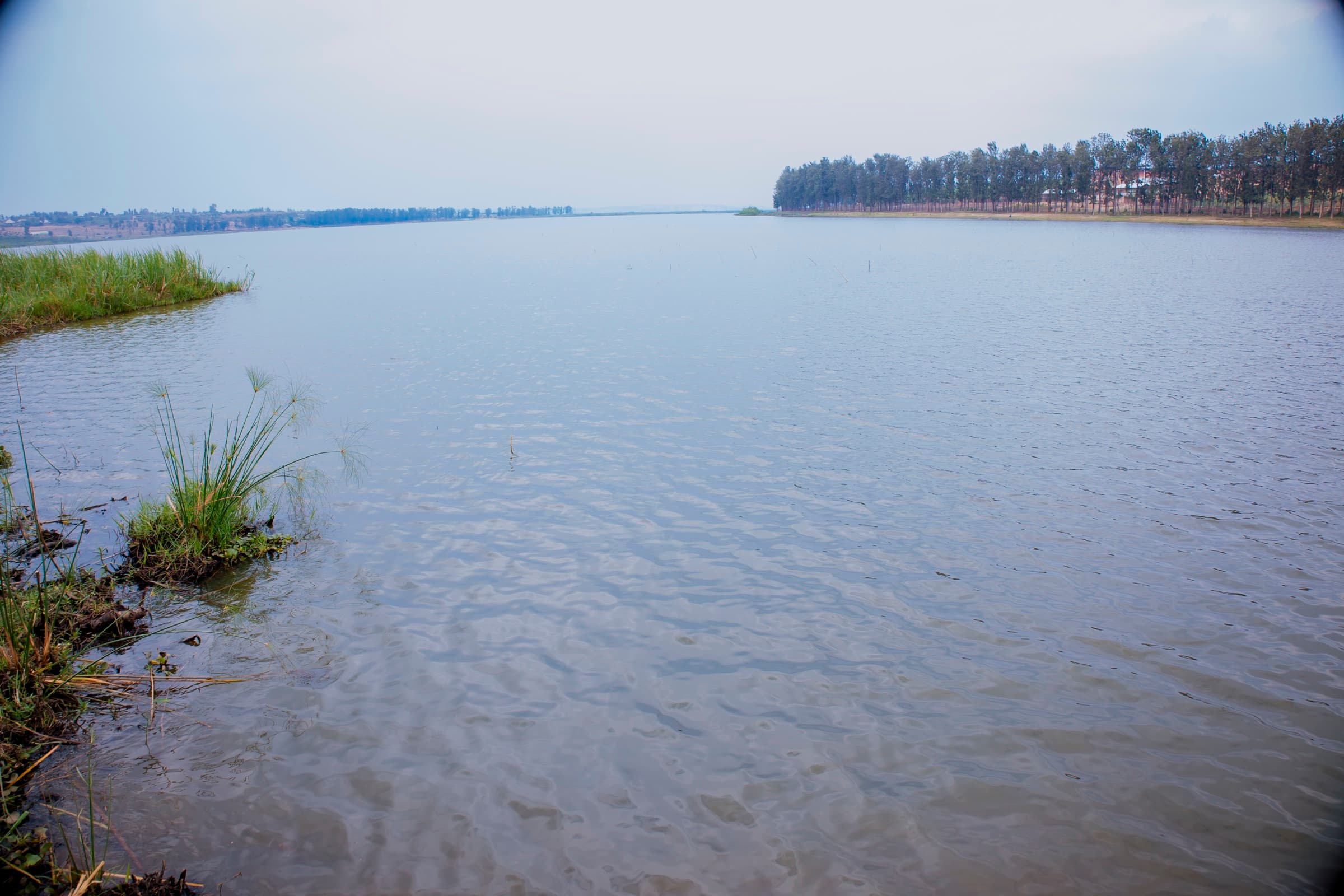
Lake Mirayi, Gashora Sector
Why Gashora
SAquaSolve's First Implementation and Proving Ground.
Bugesera is one of Rwanda's most lake-rich districts, and Lake Mirayi sits directly beside the community this first system is designed to serve. SAquaSolve is developing it here, building on the founder's own history and relationships in Gashora. Turning that resource into dependable drinking-water access requires treatment, protected storage, distribution and long-term operation — the gap this system is designed to close.
Listening to the community
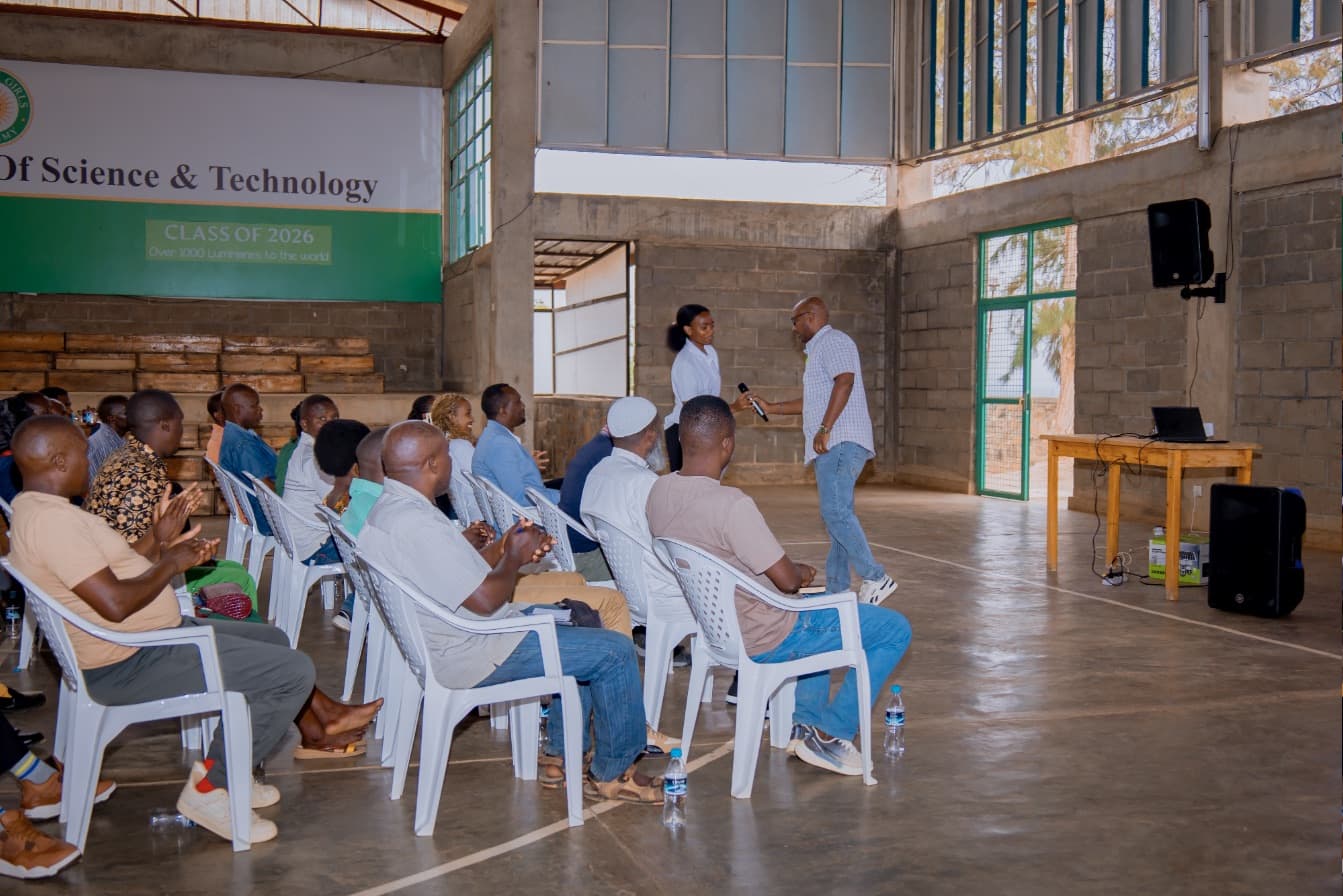
Two-day WASH and community workshops in Gashora.
SAquaSolve delivered two-day WASH and community workshops in Gashora with direct community input, in partnership with Gashora Girls Academy of Science and Technology (GGAST), funded by the 2026 Davis Projects for Peace grant administered through the University of Rochester. An initial conceptual system layout has been developed with engineering support: Lake Mirayi, solar-powered intake and pumping, raw-water conveyance, a containerized treatment plant, protected storage, and distribution to multiple community access points.
Our work in Gashora
Testing the source, mapping the service area.
SAquaSolve is characterizing Lake Mirayi's water quality directly, in collaboration with the Rwanda Institute for Conservation Agriculture (RICA) on testing and laboratory analysis, while assessing the site and hydraulics and mapping the communities and access points the system is intended to serve. That evidence determines the treatment the system needs and where it will reach, ahead of final engineering and the regulatory approvals required before construction.
System
What we're developing
One treatment hub, distributed to multiple community access points.
This is the system architecture SAquaSolve is developing for Gashora. The specific treatment processes and equipment inside the plant will be selected based on Lake Mirayi water-quality results, site conditions and engineering analysis, rather than predetermined in advance.
Solar power is central to this concept for both intake pumping and treatment. Detailed array sizing, like final treatment selection, follows the engineering phase — it is not predetermined.
Gashora Sector, Bugesera
Where Lake Mirayi sits, and the home of SAquaSolve's first implementation.
Pathway
The road to construction
Five stages underway now. One destination ahead.
The Gashora system moves through these stages in parallel, each producing the evidence the next depends on. A detailed, quotation-backed construction budget follows once engineering, treatment selection and system sizing are far enough along to support one.
01 · Understand
Understand the source
Laboratory testing and analysis of Lake Mirayi's water quality, the evidence base the rest of the system design follows.
02 · Engineer
Engineer the system
Hydraulic, treatment, solar, storage, distribution, site and monitoring design, based on measured conditions rather than assumptions.
03 · Coordinate
Coordinate approvals
Coordination with Bugesera District, the relevant water utility and responsible regulators toward the approvals required before construction.
04 · Partner
Build the right partnerships
Building the technical, institutional and funding relationships the project needs to move from validation into construction.
05 · Finance
Finance construction
Developing a detailed, quotation-backed construction budget once engineering, treatment selection and system sizing are far enough along to support one.
06 · Build
Construction & operation
Where the five stages above lead — not yet started. This is the destination the current work is validating a safe, fundable path toward.
Partnership needs
At this stage, SAquaSolve needs more than funding. It is seeking technical expertise in water-treatment, hydraulic, civil, mechanical, electrical and solar engineering; institutional relationships and government or regulatory guidance; equipment and in-kind partners; operations and maintenance expertise; and strategic and catalytic funding partners who can help move the system from validation and engineering into construction and operation.
Evidence behind the work
Explore the public data, field evidence and sources informing SAquaSolve's approach.
View Evidence & SourcesSAquaSolve aims to complement Rwanda's water-sector efforts by working with relevant institutions to develop the Gashora system responsibly. This includes coordination with Bugesera District, the relevant water utility and regulatory authorities, with all necessary guidance and approvals secured before construction.
Help move Gashora from validation to construction.
Technical expertise, institutional coordination, in-kind support, or catalytic funding — there is a pathway for most kinds of partners.